
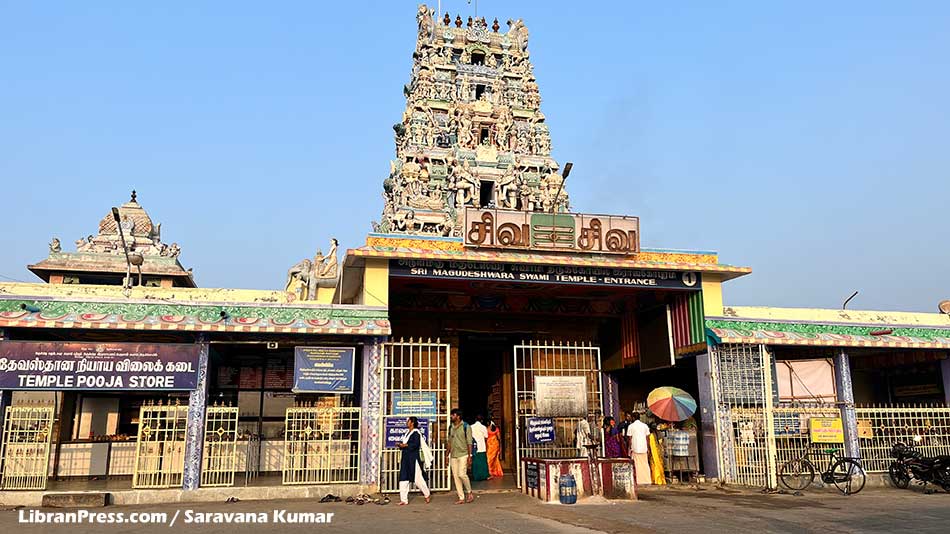
In March 2024, our temple journey led us to the sacred Kodumudi Magudeswarar Temple—a place where chants echo through the air, the aura feels timeless, and every moment invites stillness. Here, in the heart of this ancient shrine, we found not just peace, but a deeper connection to the divine.
Kodumudi Magudeswarar Temple – Rituals, Legends & Divine Expériences
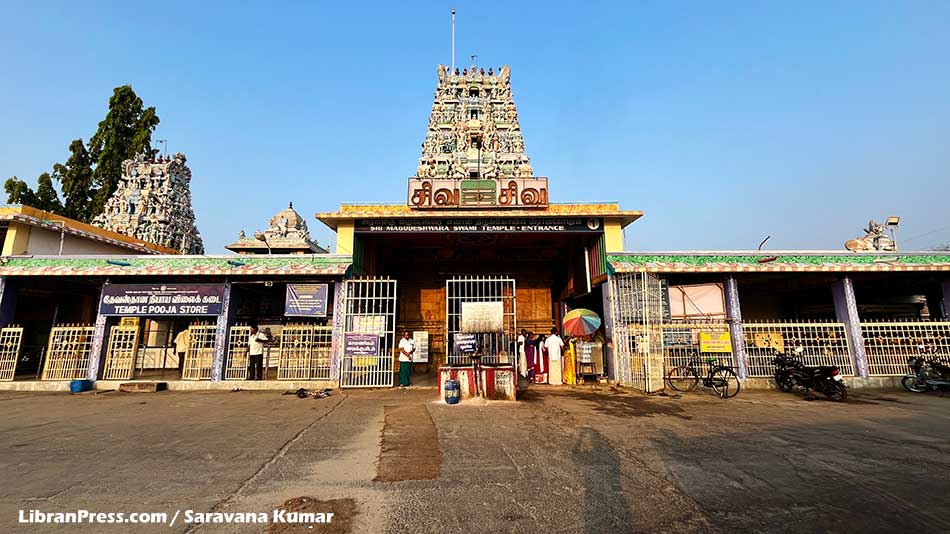
If you are planning to explore the sacred temples of South India, add the Kodumudi Magudeswarar Temple to your list. This isn’t just a temple – it is a space where faith and tradition beautifully come alive.
Here, every devotee arrives with a purpose:
- On new moon days, families perform Tarpana on the serene banks of the Kaveri, offering prayers for their ancestors.
- On their 60th birthday, many celebrate with the sacred Ayush Homa, seeking blessings for health and longevity.
- Those influenced by planetary concerns, especially the shadow of Rahu, come here with faith in divine relief.
- Guided by astrologers, couples visit this temple to overcome marriage hurdles or to pray for the gift of children.
Whatever your reason for visiting the Kodumudi Magudeswarar Temple is, here is what you should not miss inside the temple complex.
- Magudeswarar
- Sundaranayaki
- Veeranarayana Perumal
- Thirumangai Nachiyar Thayar
- Anjenye Swami
- Shaneeswar
- Sooryan and Chandran
- Vanni Tree (Brahma’s Face)
Vanni Tree
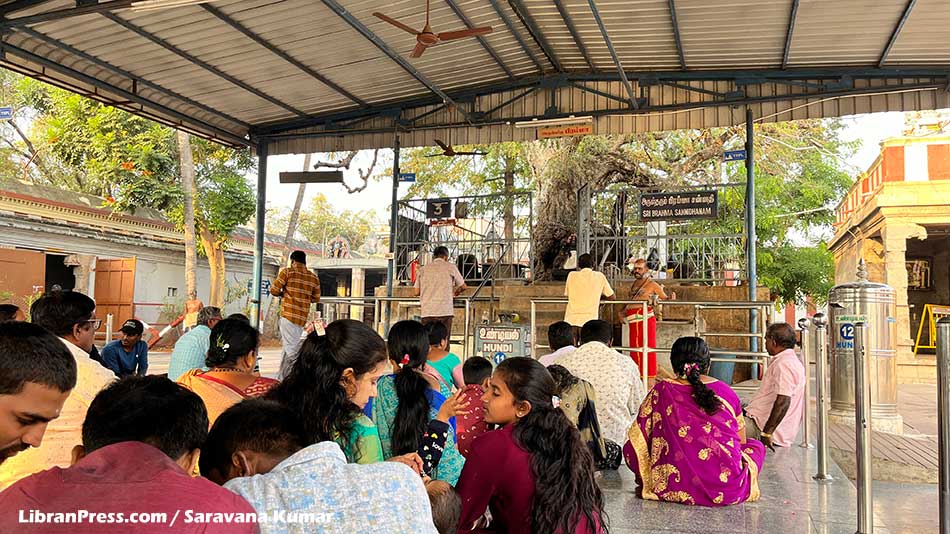
Within the temple complex stands a legendary Vanni Tree, believed to be several thousand years old. Its true age remains a mystery even to historians, adding to its aura of divinity.
The tree is revered as the fourth face of Lord Brahma, with a three-faced idol of Brahma enshrined beneath it.
Local belief says that a single leaf from this sacred tree can keep water pure. When placed in a pot of water, it preserves the water for years.
The tree is even more fascinating due to its unique nature. Some branches bear thorns, while others remain thornless. It neither blossoms nor bears fruit. This makes it a living enigma within the temple grounds.
Who built the Kodumudi Magudeswarar Temple?
It is difficult to know who built the Kodumudi Magudeswarar Temple. Like any other ancient temple, its foundation lies in myth, devotion, and royal patronage over centuries.
Mythical Origins & Sage Agastya’s Role
According to the legend, the self-manifested Shiva Lingam (Swayambhu Linga) in this temple originated when Mount Meru shattered during a cosmic contest between Adisesha and Vayu. A fragment of the mountain—believed to be a diamond—fell at Kodumudi and became the sacred lingam of Lord Magudeswarar.
Another account states that Sage Agastya installed and consecrated the Shiva Lingam and some traditions even point to his fingerprints still visible on the deity.
Historical Patronage: The Pandya Kings
The documented history points to the Pandya dynasty as significant patrons of the temple. One popular account tells about the King Malayathwaja Pandian, whose son was born with underdeveloped fingers. After praying at this temple and bathing in its sacred waters, the son’s fingers miraculously grew normally.
In gratitude, the king commissioned the construction of the three main gopurams (temple towers). He also commissioned mantapams (halls) and other renovations. This earned the shrine the title Tiruppandikkodumudi (Pandya’s Kodumudi) in his honour.
Inscriptions & Continuing Support
Epigraphs from the reign of King Sundarapandiyan Kesari further confirm the temple’s deep-rooted connection with the Pandya rulers. Additional endowments—from land to jewellery—were also bestowed by multiple Pandya kings like Malayathuvuja Pandian, Maravarman Sundarapandian, and Pandiya Kesarivarman.
So, Who Built the Temple?
It is more accurate to say that:
- Sage Agastya initiated its spiritual foundation by consecrating the Swayambhu Lingam.
- Pandya kings, especially King Malayathwaja Pandian, served as the historical benefactors. They developed the temple by building and enhancing the existing structure over time.
When to Visit Kodumudi Magudeswarar Temple?
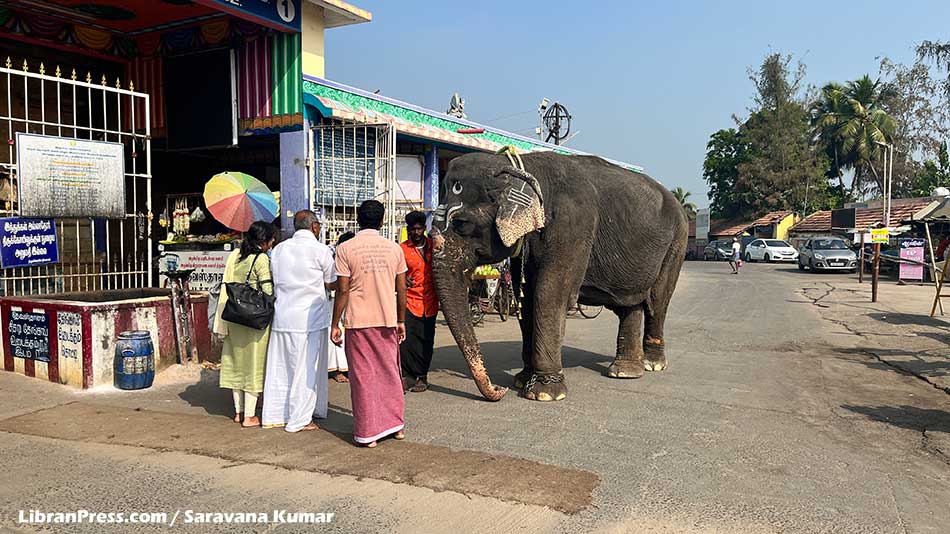
For a serene experience, visit the temple early in the morning. It is less crowded at this time. The chants create a peaceful atmosphere.
You can also consider exploring the Kodumudi Magudeswarar temple during the Tamil month of Chittirai. The grand Bhrammotsavam festival is celebrated then.
A unique spectacle occurs during the Tamil months of Panguni and Aavani. During this time, the sun’s rays directly illuminate the sanctum of Lord Shiva and Ambal for four days.
Other notable festivals include Aippasi Pournami, Thaipoosam, and Arudra Darisanam, each adding its own divine charm to the temple.
How to Reach Kodumudi Magudeswarar Temple
Sri Magudeshwara Swami Temple is located on the banks of the River Kaveri and lies close to Kodumudi railway station.
The nearest airports are Coimbatore and Trichy. By road, the temple is about 40 km from Erode and 25 km from Karur, making it an easy day trip within Tamil Nadu.
Temple Timings
The temple is open daily from:
- 6:00 AM – 12:00 PM
- 4:00 PM – 9:00 PM
Address
Sri Magudeshwarar Temple
Tirupandikodumudi, Kodumudi,
Erode District, Tamil Nadu, South India
I hope you enjoyed this glimpse into the Kodumudi Magudeswarar Temple and found it inspiring for your own temple travels. If exploring South India’s sacred sites excites you, be sure to follow the tag “South India Temples.” Discover more immersive stories and tips there.
If you enjoy these journeys and want to help keep them going, you can sponsor my travels. Your support fuels more adventures, brings hidden temples and stories to light, and helps me continue sharing them with you.
Have suggestions, experiences, or insights? Connect with me on Instagram or X (formerly Twitter)—I love hearing from fellow explorers! Thank you for your support and for travelling with me through words and experiences!